
Understanding LED and IPS Display Technologies
Before deciding which display is better for the eyes, it’s important to clarify what LED and IPS displays actually refer to.
LED (Light Emitting Diode) displays describe the backlighting technology used in LCD panels. They use small diodes that emit light, replacing older CCFL backlights.
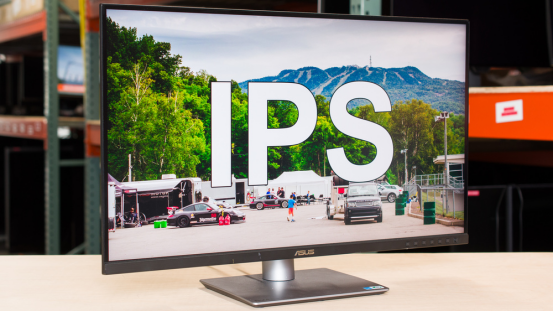
IPS (In-Plane Switching) displays, on the other hand, describe the LCD panel type, known for its superior color accuracy and wide viewing angles.
In practice, most IPS panels are also LED-backlit, so the comparison often comes down to IPS vs. other LCD types (like TN or VA) in terms of eye comfort, viewing quality, and brightness consistency.
Eye Comfort Factors in IPS Display Technology
1. Stable Color and Brightness
One of the standout advantages of an IPS display is its stable image quality. Unlike TN (Twisted Nematic) panels, IPS panels maintain consistent brightness and color across wide angles—up to 178° horizontally and vertically.
This means the eyes don’t have to constantly adjust to contrast or brightness changes when viewing from different positions.
Reduced brightness fluctuation minimizes eye muscle fatigue over long viewing sessions.
2. Blue Light and Flicker Control
Many modern IPS LED displays are equipped with low blue light and flicker-free backlight technologies.
Blue light below 455 nm wavelength is linked to digital eye strain and potential retinal stress.
Studies show that reducing blue light intensity by 30–50% can significantly lower eye discomfort during prolonged use.
IPS screens with flicker-free DC dimming eliminate the invisible flicker that PWM (Pulse Width Modulation) backlights produce, helping prevent headaches and blurred vision.
3. Contrast and Brightness Levels
IPS displays typically offer contrast ratios around 1000:1, delivering smooth grayscale performance that eases the eyes when reading or editing visual content.
By comparison, some LED panels using TN technology have uneven contrast distribution, leading to overexposed whites and deep shadows that strain the retina in dark environments.
Comparing LED Display and IPS Display for Eye Health
1. Brightness Consistency
LED-backlit displays without IPS technology often suffer from uneven brightness zones. When one side of the screen is brighter, the pupils must constantly adapt—causing micro-fatigue.
In contrast, IPS displays distribute LED light uniformly through advanced diffusion layers, maintaining balanced brightness across all pixels.
2. Color Temperature and White Balance
LED displays often use cool white backlights with color temperatures above 7500K, producing harsh, blue-tinted light.
IPS displays are more likely to be factory-calibrated with sRGB or D65 (6500K) color temperature standards, which generate softer, natural whites that are gentler on the eyes.
3. Viewing Environment Adaptability
For professionals working long hours—designers, programmers, and office staff—IPS displays perform better under varied lighting conditions.
They reflect less ambient light due to anti-glare coatings.
Their luminance uniformity error is typically below 15%, reducing localized eye stress.
Practical Tips for Eye-Friendly Display Use
Even the most advanced IPS display can still cause eye strain if used improperly. To maximize comfort:
Adjust brightness to match ambient light (typically 120–180 cd/m² for indoor use).
Enable eye-care modes, such as warm color temperature or reading mode.
Follow the 20-20-20 rule — every 20 minutes, look at something 20 feet away for 20 seconds.
Maintain a proper distance (about 50–70 cm from the screen).
These practices, combined with an IPS panel’s inherent visual stability, help maintain long-term eye health.
Verdict: Is IPS Display Better for Eyes?
In most real-world applications, IPS displays are indeed better for the eyes than standard LED or TN panels. Their:
consistent brightness,
reduced color distortion,
low blue light options, and
flicker-free backlights
For long-term screen users—whether in smart home systems, wearable devices, or automotive dashboards—IPS display modules clearly outperform standard LED panels in terms of eye comfort, color stability, and brightness uniformity.

At Easy Quick, we specialize in manufacturing high-quality IPS display modules that combine low blue light, flicker-free backlighting, and wide viewing angles to protect user eyes while delivering vivid, reliable visuals. Our solutions are tailored for both OEM partners and product developers who prioritize user experience and eye health.
If you want your devices to offer not just outstanding display performance but also eye-friendly design, partner with Easy Quick today. Contact us to explore our IPS display modules and bring a new level of comfort and quality to your products.