

As the world enters the era of connected living, the integration of AIoT (Artificial Intelligence + Internet of Things) has become the driving force behind the next wave of smart home innovation. From intelligent thermostats and security systems to energy management hubs and kitchen displays, LCD display technology remains a key interface between humans and smart environments. Despite the rise of OLED and other emerging technologies, LCD continues to dominate the AIoT display market due to its balance of performance, reliability, and cost-efficiency.
1. The Foundation of AIoT Display Systems
AIoT and smart homes rely on real-time data collection, visualization, and interaction. In these ecosystems, the display serves not only as a visual output but also as the primary Human–Machine Interface (HMI).
High information density: Modern LCD displays for smart home devices can show multi-layered data such as temperature, humidity, and system status with resolutions up to 480×480 or higher, ensuring clarity even on compact screens.
Stable performance: Compared to OLED, LCDs maintain visual consistency under long operating hours, which is essential for 24/7 devices like home automation panels or HVAC controllers.
Scalability: LCD modules are available in sizes from 0.96 to 10.1 inches, allowing design flexibility for both handheld sensors and wall-mounted control units.
The result is an ecosystem where every display acts as a window to the AIoT network—converting invisible data flows into understandable, actionable information.
2. Why LCD Displays for Smart Home Devices Remain a Core Choice
Although newer display technologies gain attention, the practical deployment of LCD displays for smart home devices remains unmatched in several aspects:
2.1 Cost Efficiency and Supply Chain Maturity
LCD production has reached a high level of maturity, with global manufacturing costs reduced by nearly 25% over the past five years. For smart home device makers, this ensures stable supply and predictable pricing—critical factors for scalable AIoT product lines.
2.2 Energy Efficiency and Longevity
With optimized LED backlights and reflective designs, today’s TFT LCD modules consume 30–40% less power than older generations. In a home automation network with multiple always-on devices, energy efficiency directly impacts overall system sustainability.

2.3 Environmental Robustness
Unlike OLED, which can suffer from burn-in or degradation in sunlight exposure, LCD displays maintain durability across -20°C to 70°C, making them suitable for both indoor and outdoor smart panels, electric vehicle charging stations, and home gateways.
3. Technical Innovations in AIoT Display Integration
The intersection of AI and IoT introduces new requirements for display modules. LCD technology continues to evolve to meet them:
Touch and gesture interfaces: Modern capacitive touch integration allows intuitive control without physical buttons, enhancing the user experience.
Low-power communication: LCD modules now support SPI, I²C, and MIPI interfaces, enabling seamless connection with AIoT microcontrollers and wireless modules like ESP32 and Nordic nRF chips.
Enhanced visibility: High-brightness LCDs (up to 1000 nits) and wide viewing angles ensure readability in bright environments such as kitchens, balconies, or smart mirrors.
These advancements make LCDs not just passive screens but intelligent components that interact with sensors, voice assistants, and cloud-based analytics platforms.
4. Application Cases in the AIoT and Smart Home Market
In real-world deployments, LCD displays are integral to several fast-growing product categories:
Smart thermostats and HVAC systems: Using 2.4–3.5-inch LCDs, these systems visualize real-time temperature and energy usage, supporting eco-friendly home management.
Home security dashboards: Mid-sized TFT LCDs allow homeowners to monitor camera feeds, alarms, and notifications simultaneously.
Smart kitchen appliances: From coffee makers to ovens, compact 1.3–2.0-inch LCD modules provide intuitive menu navigation.
Lighting and environmental controls: Touch-enabled LCD panels help users adjust ambiance, brightness, or ventilation through visual presets.
According to Statista’s 2025 forecast, the global AIoT smart home market is expected to surpass $195 billion, with over 60% of devices equipped with LCD or TFT displays—highlighting their continuing dominance in visual interface design.
5. The Future Outlook: Smart Displays Driving Connected Living
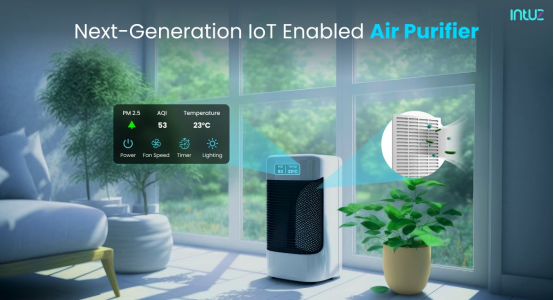
As AI algorithms become more context-aware, display interfaces will evolve from simple control hubs into adaptive visual systems that anticipate user needs. For example, an AIoT-connected air purifier could adjust display brightness based on ambient light or switch modes automatically when detecting higher pollution levels.
LCD displays—with ongoing improvements in contrast, response time, and integration flexibility—will continue to play a central role in this transition toward predictive smart living.
Conclusion: Partnering for the Future of AIoT Display Solutions
The synergy between AIoT intelligence and LCD display technology defines the visual core of every smart home. While new technologies emerge, LCD’s proven reliability, efficiency, and adaptability make it indispensable in the connected world.
At Easy Quick Technology, we specialize in developing custom LCD display solutions for AIoT and smart home devices, including compact TFT modules, high-brightness screens, and touch interfaces optimized for next-generation connectivity.
If you’re designing the next breakthrough in smart living, partner with Easy Quick—where innovation meets reliable display engineering.