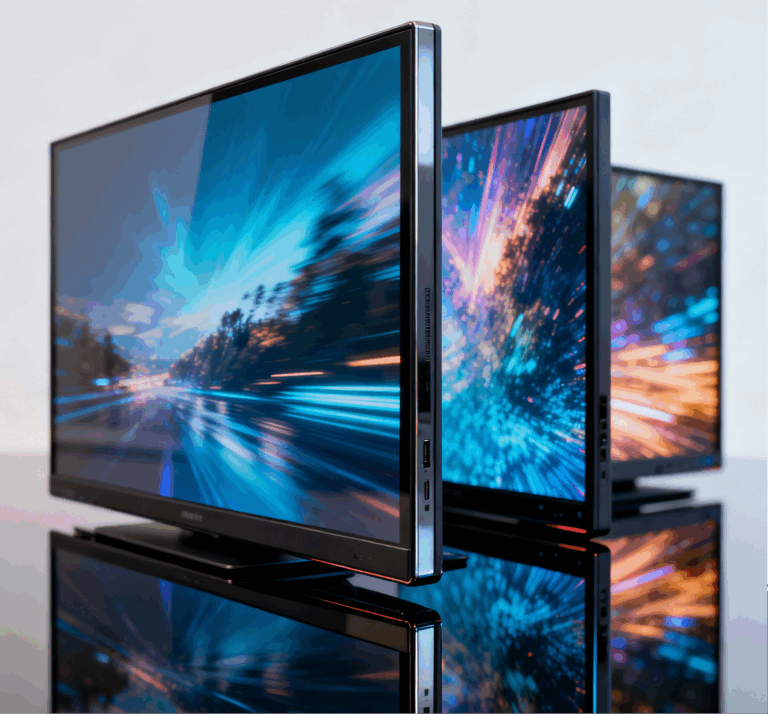


With screens being used in ever-more diverse ways than ever before, display technology is having to adapt to the changing lighting, power, and user demands. This is where the relevance of lcd semi-transmissive technology comes into the picture. These displays are designed in a way that leverages the lighting of the ambient environment, along with the backlighting.
In this article, the nature of lcd semi-transmissive displays will be described, the principles behind how they function, why they differ from other types of TFT LCDs, and when they would be most appropriately utilized.
1. Semi-Transmissive TFT LCD Display Features
In essence, lcd semi-transmissive technology is a hybrid technology in the realm of TFT LCD technology. This technology combines properties of both transmissive displays and reflective displays. While transmissive displays rely on backlighting for illumination, reflective displays make use of ambient light to display images.
Important characteristics of lcd semi-transmissive displays are:
- Reflects some incident light to enhance readability in bright light conditions.
- Integrated controllable backlight for use in low-light or nighttime environments.
- Optimized pixel structure to balance brightness, contrast, and power consumption.
While fully transmissive screens tend to perform poorly in direct sunlight, semi-transmissive lcd panels remain functional in the great outdoors. However, they do not suffer from the washed-out effect associated with purely reflective lcd panels, either indoors or at night.
2. How LCD Semi-Transmissive Displays Operate Under Real-World Conditions
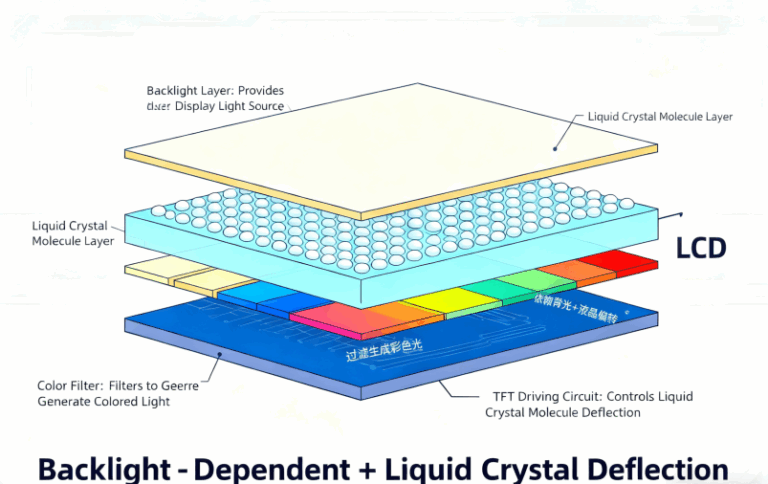
The operation principle of an lcd semi-transmissive display is based on controlled light management. A liquid crystal layer is combined with a semi-reflective layer, which reflects ambient light while allowing backlight passage. In bright conditions:
When sunlight or strong ambient light shines on the display screen, some of the light will be reflected back through the liquid crystal layer, allowing the screen to display clearly even in situations with weak backlighting.
In dim or dark environments:
- The backlight will now be the main source of illumination.
- The semi-reflective layer ceases to dominate the visibility.
It is this dual-mode functionality that makes semi-transmissive LCDs so versatile. The devices do not have to increase the brightness of the backlight in order to overcome the effect of sunlight, thereby improving energy efficiency.
3. Benefits That Make lcd semi-transmissive A Popular Option
The increasing use of lcd semi-transmissive panels is encouraged by several practical advantages.
- Better Outdoor Readability: These displays can be viewed under strong sunlight. Therefore, they can be used in vehicles.
- Consume Less Power: This cuts down on the usage of backlighting, thus increasing the battery life of the portable devices.
- Balanced Visual Performance: These displays provide greater contrast and image clarity compared to reflective displays but are not as power-hungry as transmissive displays.
- Eye Strain is Lessened: Because the brightness automatically adjusts to the surrounding light conditions, the user does not experience any glare or fatigue.
The lcd semi-transmissive design is becoming more popular among manufacturers as the devices need to function well in more than one environment, as opposed to being in one controlled environment.
4. Where LCD Semi-Transmissive Displays Are Commonly Used
The flexibility of the lcd semi-transmissive technology enables it to be applied in different applications.
Automobile Displays
Vehicle instrument clusters, car dashboards, or infotainment systems can be exposed to drastic lighting conditions. lcd semi-transmissive displays provide:
- Clearly visible even under direct sunlight
- Lower power consumption compared to high-brightness transmissive displays
Industrial and Field Equipment
In industrial control panels, as well as in portable measurement devices, the lighting environment is unpredictable. lcd semi-transmissive panels support:
- Consistent performance under prolonged operating hours
- Reduced maintenance requirements because of optimal use of power
Wearable and Portable Devices
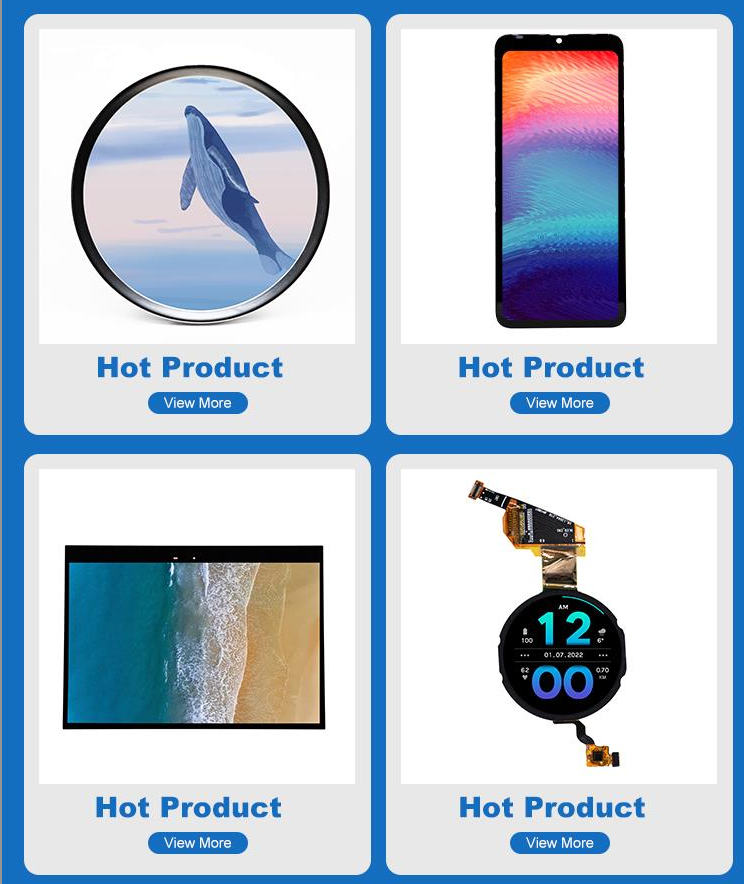
Semi-transparent lcd designs are applicable in smartwatches, handheld terminals, and GPS because:
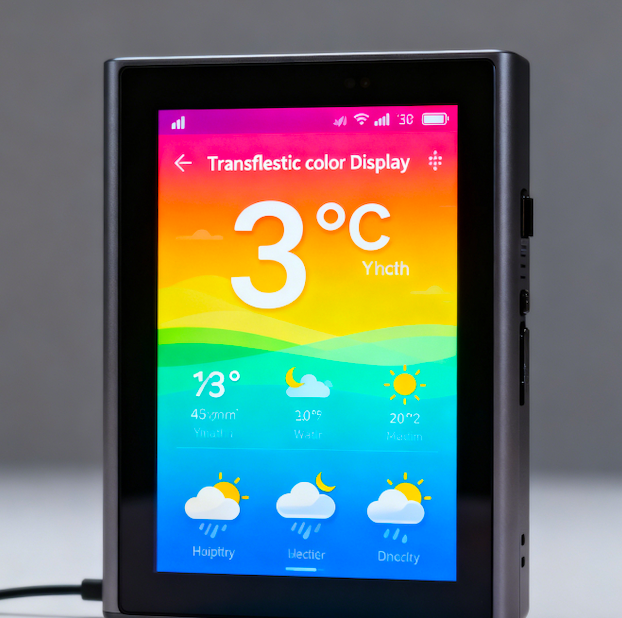
- The displays are legible in daylight conditions
- Battery life is extended
- The performance of displays automatically adjusts to the environments of the users.
Easy Quick, a manufacturer with extensive technical expertise in this field, has integrated transflective LCD panel solutions into custom display modules to meet the needs of such demanding applications.
5. LCD semi-transmissive vs Other TFT LCD Types
To better understand the worth of the lcd semi-transmissive, it is important to know how it differs from other types of TFT LCDs.
Transmissive TFT LCDs
Provides vibrant color in the home, but is not effective in sunlight.
Reflective TFT LCDs
It depends on ambient lighting, is highly energy-efficient, but not effective under dim lighting.
LCD Semi-transmissive TFT LCD
Combines both methods; balanced performance for lighting environments.
Thus, this middle-ground approach helps to understand why semi-transmissive displays with an lcd technology are preferred when more emphasis is given on versatility as opposed to brightness and power consumption.
6. Design Considerations for LCD Semi-Transmissive Displays
- Illuminate target environments
- Contrast and resolution requirements
- Power availability and battery capacity
- The View angles & expected colors.
Semi-transmissive panels may lack the color saturation of more expensive transmissive panels, but they provide consistent readability in variable lighting conditions.
Conclusion
In situations where the LCD device would have to be used both indoors and outdoors, or where it would have to be used continuously with limited power, semi-transmissive technology in LCDs would offer a viable solution. The hybrid technology in LCD displays would continue to be a part of LCD technology advancements.