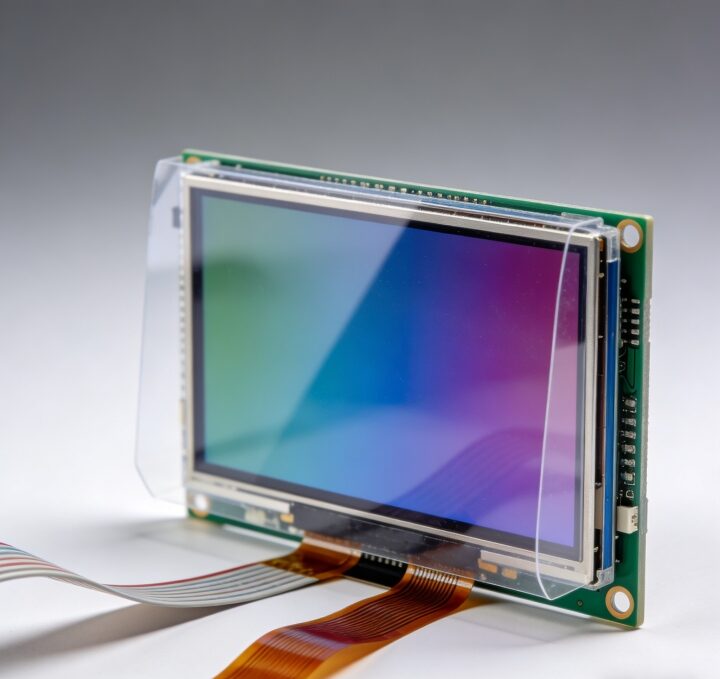


When it comes to LCD display technology, not all screens are created equal. While many users focus on resolution, size, or touch capability, one of the most important — and often overlooked — distinctions lies in how a display interacts with light. LCD modules can generally be classified into three main types: transmissive, reflective, and transflective. Each type has unique characteristics that determine how well it performs under different lighting conditions.
Understanding the differences among these display modes is crucial for engineers, designers, and product developers when choosing the right solution for their applications — whether for consumer electronics, industrial control systems, or outdoor devices.

Transmissive LCDs: Bright and Vibrant Indoors
Transmissive LCDs are the most common type used in smartphones, tablets, monitors, and televisions. They rely entirely on a backlight to illuminate the display. The light passes through the liquid crystal layer and color filters before reaching the viewer’s eyes. This design ensures vivid colors, high brightness, and sharp contrast — especially in indoor or dimly lit environments.
However, transmissive displays have one major drawback: poor sunlight readability. Under direct sunlight, the strong ambient light overwhelms the backlight, causing the screen to appear washed out or even unreadable. To compensate, manufacturers often increase backlight brightness, but that comes at the cost of higher power consumption and shorter battery life — a serious limitation for portable or battery-powered devices.
Typical applications: smartphones, laptops, TVs, indoor control panels, and consumer displays.
Advantages:
– Excellent color reproduction and image quality
– High brightness for indoor use
– Suitable for video or multimedia applications
Disadvantages:
– Difficult to read in bright sunlight
– Higher power consumption
– More heat generation from strong backlighting
Reflective LCDs: Power-Efficient and Sunlight-Readable
Reflective LCDs, as the name suggests, rely on ambient light instead of a backlight. A reflective layer behind the liquid crystal reflects external light (such as sunlight) back through the display. The brighter the surrounding light, the clearer the image becomes. This makes reflective LCDs ideal for outdoor environments, where sunlight is abundant.
Because they do not require a backlight, reflective displays consume very little power, making them perfect for energy-efficient or always-on devices. However, this design also means they struggle in low-light or indoor conditions, where there is insufficient ambient light for visibility.
Typical applications: outdoor equipment, e-readers, handheld instruments, and low-power industrial displays.

Advantages:
– Excellent sunlight readability
– Ultra-low power consumption
– Long battery life
Disadvantages:
– Poor visibility in dark environments
– Limited color saturation compared to transmissive LCDs
– Not suitable for video or multimedia content
Transflective LCDs: The Best of Both Worlds
Transflective LCDs combine the principles of both transmissive and reflective displays. They feature a semi-reflective layer that allows some backlight to pass through while also reflecting ambient light. In bright sunlight, the reflective component enhances visibility; in dark conditions, the backlight ensures the screen remains readable.
This hybrid design provides excellent versatility, allowing transflective LCDs to adapt to changing lighting conditions without sacrificing too much color performance or power efficiency. While they may not achieve the full color vibrancy of transmissive screens or the extreme efficiency of reflective ones, transflective displays strike a practical balance.
Typical applications: industrial instruments, outdoor kiosks, automotive dashboards, marine displays, and military equipment.
Advantages:
– Readable in both bright sunlight and darkness
– Balanced power consumption
– Reliable for outdoor and mixed environments
Disadvantages:
– Moderate color performance compared to transmissive LCDs
– Slightly higher cost due to complex design
– Limited contrast under some viewing angles
Real-World Comparison: Performance by Environment
Environment | Best LCD Type | Reason
Indoor Office | Transmissive LCD | Superior color and brightness
Outdoor Sunlight | Reflective LCD | Excellent visibility under strong light
Mixed Indoor/Outdoor | Transflective LCD | Adaptive to changing light conditions
Portable Battery Device | Reflective LCD | Minimal power usage
Industrial/Vehicle Dashboard | Transflective LCD | Reliable under diverse environments

Choosing the Right Display for Your Application
Selecting the correct LCD technology depends on your application’s operating environment, power requirements, and visual performance needs.
For example:
A smart home panel will benefit from a transmissive LCD for its rich visuals.
A motorcycle dashboard or outdoor instrument should use a reflective or transflective LCD for maximum readability under sunlight.
A handheld industrial terminal might choose a transflective LCD to balance visibility and power efficiency.
At Shenzhen EasyQuick Technology Co., Ltd., we specialize in a full range of display solutions, including reflective, transmissive, and transflective LCD modules. Our products are engineered for durability, wide temperature operation, and high visibility in any environment. Whether you need a sunlight-readable reflective screen or a high-contrast industrial LCD module, we can help you select and customize the perfect solution.
Conclusion
In summary, transmissive, reflective, and transflective LCDs differ not just in how they emit or reflect light, but in how they perform under real-world conditions. Transmissive displays deliver vibrant images indoors, reflective LCDs shine outdoors with low power consumption, and transflective modules provide adaptability across all lighting conditions.
Understanding these differences allows designers and engineers to create more effective, user-friendly products — ensuring that every display looks its best wherever it’s used.