

Understanding the Basics of LCDs
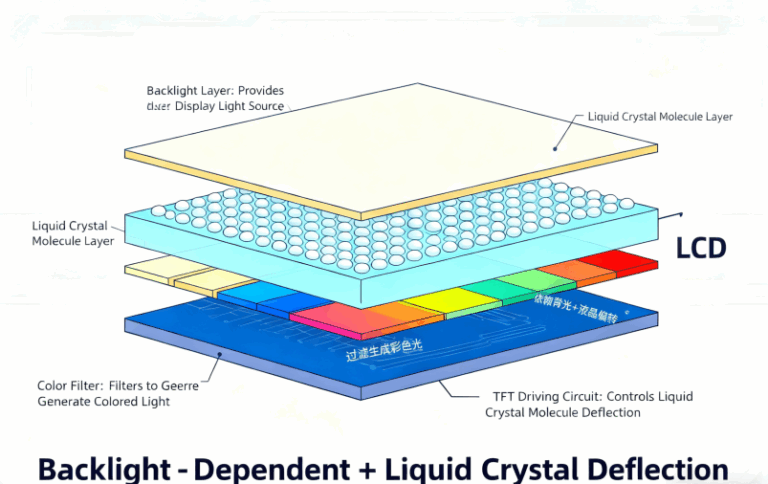
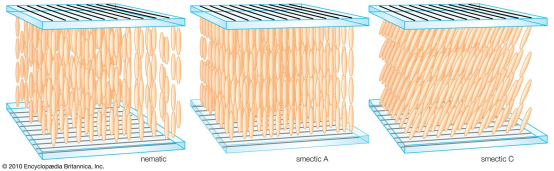
Liquid Crystal Displays (LCDs) are one of the most widely used display technologies in the modern world, powering everything from smartphones to medical equipment. At their core, LCDs rely on the unique properties of liquid crystal materials, which combine the fluidity of liquids with the molecular alignment of solid crystals. These molecules can change their orientation when subjected to an electric field, allowing them to control the passage of light.
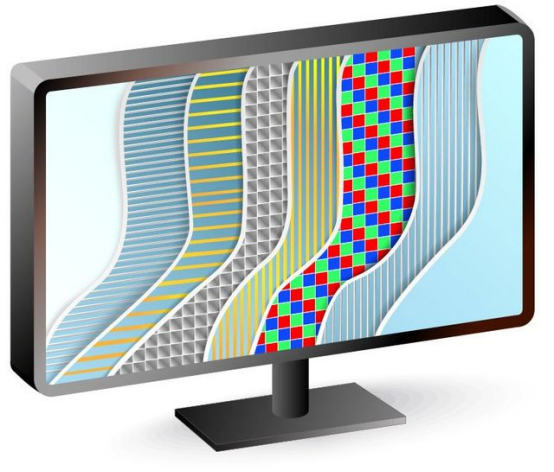
Unlike older display technologies such as cathode-ray tubes (CRTs), LCDs are thinner, lighter, and consume significantly less power. For example, a typical 6-inch LCD panel requires around 2–4 watts, compared to 30 watts or more for a CRT of similar size.
How LCDs Work: The Technical Mechanism
The Role of Liquid Crystals
Liquid crystals are arranged between two transparent glass layers coated with thin electrodes. A polarizing filter is placed on each side of the glass layers. Without voltage, the crystals naturally twist the light by about 90 degrees, allowing it to pass through the second polarizer. When a voltage is applied, the molecules align with the electric field and no longer twist the light, effectively blocking it.
This on-off control of light at the pixel level creates the images we see on the screen. Each pixel itself is divided into sub-pixels of red, green, and blue, which combine to display millions of colors. For example, a 1080 × 2400 resolution LCD contains over 2.5 million pixels, and with three sub-pixels per pixel, that totals more than 7.5 million sub-pixels actively controlled.
Backlighting in LCDs
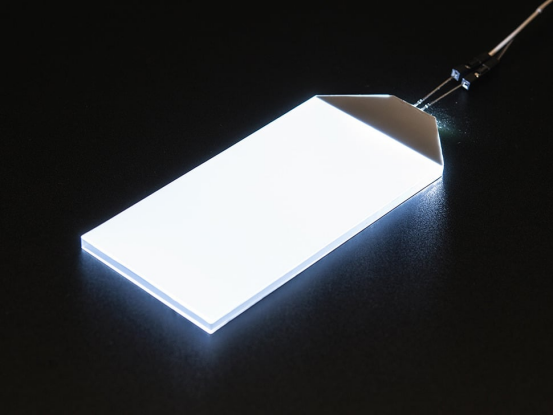
Since liquid crystals do not emit light, LCDs require a backlight system. Modern displays use white LED backlights because they are energy-efficient and provide a long lifespan—often exceeding 50,000 hours. The backlight passes through a diffuser and a light guide panel to ensure uniform brightness.
Types of LCDs
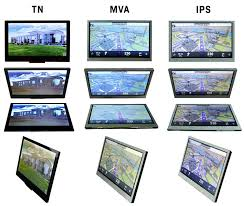
Twisted Nematic (TN) LCDs
Fast response times, often below 5 ms, ideal for gaming and industrial applications.
Limited viewing angles, usually less than 170 degrees.
Affordable and widely available.
In-Plane Switching (IPS) LCDs
Superior color reproduction and wide viewing angles up to 178 degrees.
Response times slower than TN but now improved to 8 ms or lower.
Frequently used in smartphones and professional monitors.
Vertical Alignment (VA) LCDs
Better contrast ratios, often 3000:1, compared to 1000:1 in TN panels.
Suitable for televisions and multimedia displays.
Moderate response times, making them a middle ground between TN and IPS.
Advantages and Limitations of LCDs
Advantages
Energy efficiency: On average, LCDs consume 50–70% less power than plasma displays.
Slim profile: Panels can be as thin as 5 mm, enabling lightweight portable devices.
High resolution: Modern LCDs support 4K and even 8K resolutions with sharp detail.
Limitations
Dependence on backlight: Blacks are not perfectly dark because some light leakage occurs.
Response time: Although greatly improved, some models still show motion blur.
Temperature sensitivity: Liquid crystals operate best between 0°C and 50°C; extreme cold or heat can reduce performance.
Extended Applications of LCDs
Consumer Electronics
LCDs dominate smartphones, tablets, and laptops due to their thinness and low power consumption. A 13-inch laptop LCD, for instance, typically draws only 5–7 watts, which extends battery life significantly.

Automotive Displays
Modern vehicles integrate LCDs in dashboards, infotainment systems, and rear-seat entertainment. They must withstand vibration and operate reliably from -20°C to 70°C.

Medical and Industrial Uses
High-resolution LCDs are critical for diagnostic imaging, control panels, and portable testing devices. In surgical monitors, the resolution can exceed 3840 × 2160 pixels (4K) to provide precise visualization.
Future Directions of LCD Technology
While OLED and MicroLED technologies are gaining attention, LCDs continue to evolve. Advanced backlighting methods such as mini-LED allow for localized dimming zones, improving contrast ratios to nearly 1,000,000:1. Furthermore, LCD manufacturing costs remain lower than emerging alternatives, making them the dominant choice for large-size screens like televisions over 65 inches.
Conclusion
LCDs work by controlling light with liquid crystals and polarizers, powered by a consistent backlight. Their balance of efficiency, affordability, and image quality has made them indispensable across industries. Although competing technologies exist, continuous innovations—such as mini-LED backlighting and higher refresh rates—ensure that LCDs remain a cornerstone of modern display solutions.
Next Steps: Explore More About LCDs
Understanding how LCDs work is only the first step. If you are a professional, student, or tech enthusiast looking to dive deeper, there are several ways to expand your knowledge:
Explore case studies: Learn how LCDs are applied in smartphones, automotive dashboards, and medical devices.
Compare technologies: Study the differences between LCDs, OLEDs, and MicroLEDs to understand which suits your project best.
Stay updated: Display technology evolves rapidly—refresh rates, resolutions, and backlighting systems are advancing every year.
👉 Whether you are sourcing display modules for industrial projects, designing consumer electronics, or simply curious about display science, LCDs remain a reliable and evolving choice. To discover more about LCD solutions, feel free to connect with us or explore additional resources on our website.