
1.Introduction: Understanding the Display Landscape
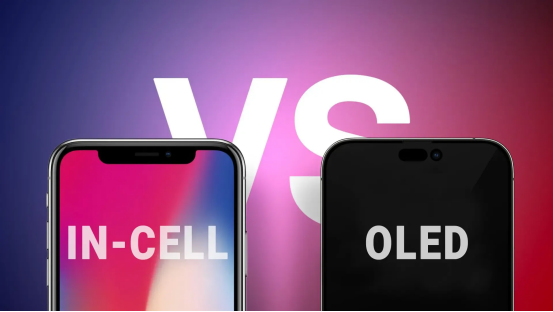
The display industry has evolved rapidly over the past decade, with two major technologies dominating modern devices —Incell vs OLED
While both aim to deliver high-quality visual experiences, they differ significantly in structure, manufacturing process, and performance characteristics. Understanding these differences is essential for engineers, product managers, and procurement specialists when selecting the most suitable display for their applications.
2.Structural Differences Between Incell and OLED Displays
2.1 Incell Display Technology
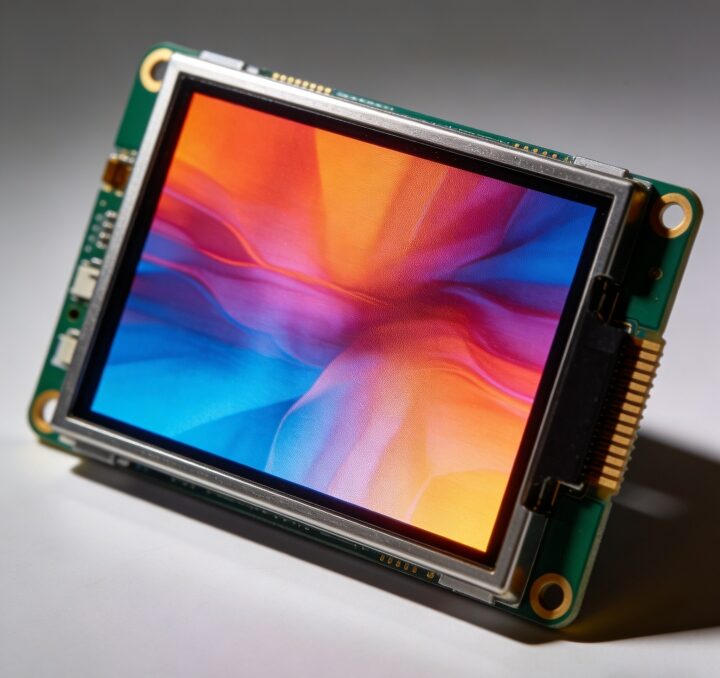
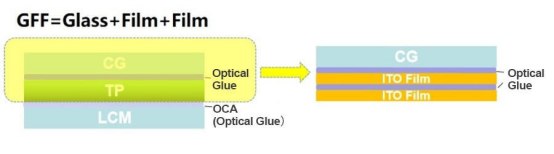
Incell displays are based on LCD (Liquid Crystal Display) architecture but integrate the touch sensor layer directly into the cell of the display. Traditionally, LCDs required multiple layers: the backlight unit, liquid crystal layer, touch sensor, and cover glass. By embedding the touch function into the display panel itself, Incell design eliminates one separate layer, reducing thickness by around 15–20% compared to conventional OGS or G+F+F structures.
Key structural features of Incell:
Integrated touch and display layers
Requires a backlight for illumination
Lower optical loss compared to multi-layer LCDs
Compatible with mass LCD production lines
2.2 OLED Display Technology
OLED (Organic Light Emitting Diode) displays work on a self-emissive principle — each pixel generates its own light. Therefore, no backlight or liquid crystal layer is required. The structure is simpler yet more advanced, typically composed of anode, cathode, and multiple organic layers that emit light when electricity passes through.
Key structural features of OLED:
Self-emissive pixels with no backlight
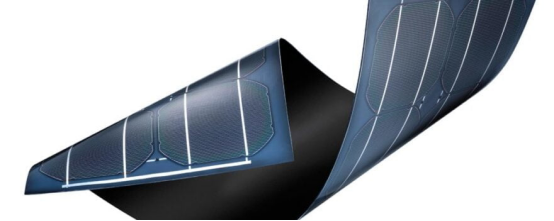
Thinner and more flexible panel design
Capable of achieving true blacks (contrast ratio > 1,000,000:1)
Supports foldable or curved form factors
3.Performance Comparison: Incell vs OLED
3.1 Visual Quality
OLED panels generally provide superior contrast and color saturation, with DCI-P3 coverage above 100% and response times below 1 ms. In contrast, Incell LCDs achieve contrast ratios around 1200:1 and response times near 8–10 ms, sufficient for most smartphones and industrial devices but slightly behind OLED in dynamic scenes or gaming.
3.2 Power Consumption
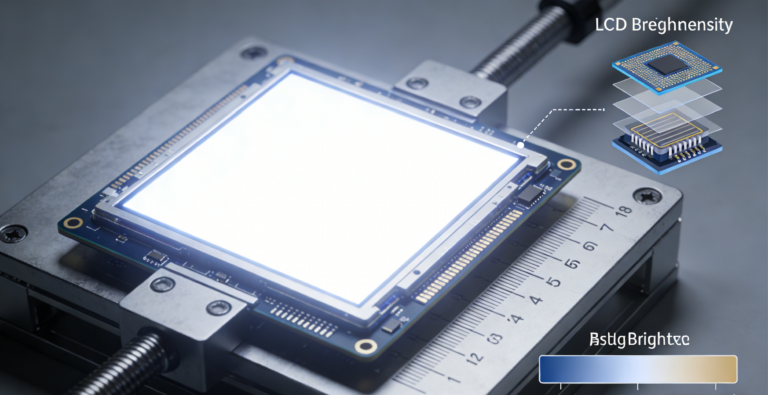
Since OLED pixels emit their own light, they can turn off individual pixels to save energy during dark scenes. This gives OLED displays an advantage of 20–30% lower power usage in dark-mode interfaces. However, at high brightness levels (e.g., outdoor visibility), OLED panels may consume more power due to the need to light all pixels individually, while Incell LCDs maintain more stable consumption through the backlight system.
3.3 Durability and Lifetime
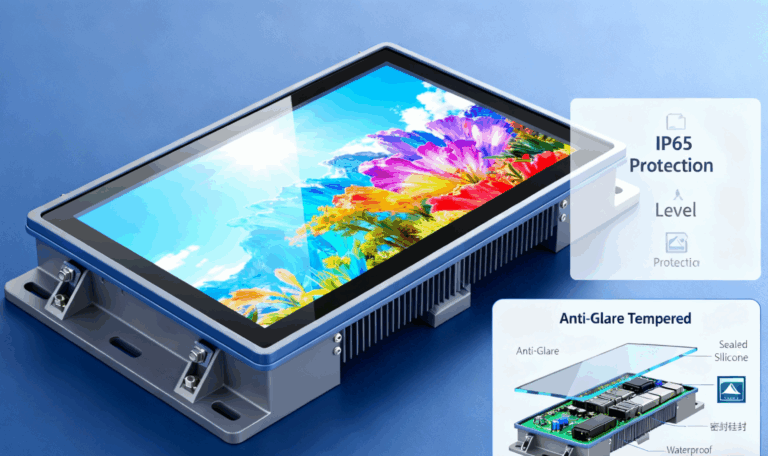
OLED panels are sensitive to moisture, oxygen, and image retention (burn-in), with a typical lifespan of 20,000–30,000 hours for blue pixels. Incell LCDs, being more stable and mature, can reach 50,000 hours or longer with minimal degradation. This makes Incell technology preferable for industrial, automotive, or outdoor devices where longevity outweighs ultra-high contrast.
4.Cost and Production Considerations
4.1 Manufacturing Cost
OLED panels require vacuum evaporation equipment and encapsulation processes, making production costly and yield rates lower, especially for large panels. In contrast, Incell LCDs can be produced using existing LCD lines, reducing setup costs and offering 20–40% lower unit price than equivalent OLED displays.
4.2 Supply Chain and Scalability
Incell technology benefits from a mature LCD supply chain, especially in China and Taiwan, where large-scale production keeps prices competitive. OLED production, dominated by a few players like Samsung and LG, faces capacity constraints and higher dependence on high-end materials such as LTPO and flexible substrates.
5.Extended Applications and Market Trends
5.1 Application Scenarios
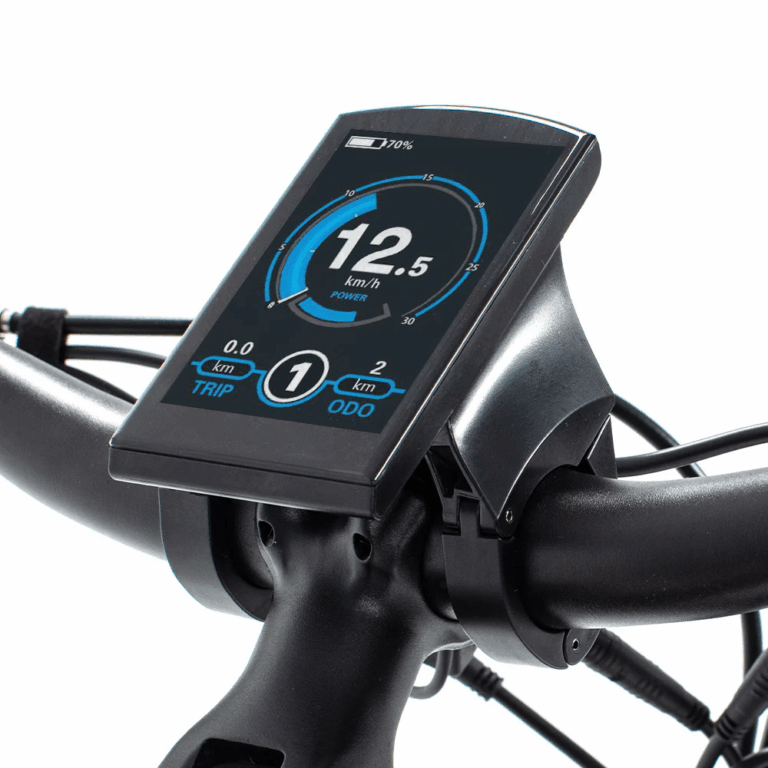
Incell LCD: Smartphones, industrial equipment, e-bikes, smart home devices, and automotive dashboards — ideal where durability and cost-efficiency matter.
OLED: Premium smartphones, smartwatches, VR headsets, and foldable devices requiring flexibility and superior contrast.

5.2 Future Outlook
According to Omdia’s 2024 report, OLED smartphone penetration reached 54%, while LCD still holds a significant 46% market share due to its balance of cost and performance. Innovations like Mini-LED and hybrid OLED-LCD technologies are also blurring boundaries between the two, offering new display possibilities.
6.Conclusion
The debate of Incell vs OLED reflects a trade-off between mature practicality and high-end innovation. Incell LCDs offer reliable performance, lower cost, and longer lifespan — ideal for mass-market or industrial applications. OLED, on the other hand, delivers unmatched image quality and design flexibility but comes with higher cost and shorter lifespan.
Ultimately, the right choice depends on product priorities — if your goal is visual excellence and thin design, choose OLED; if you value stability, affordability, and durability, Incell remains the smarter option.