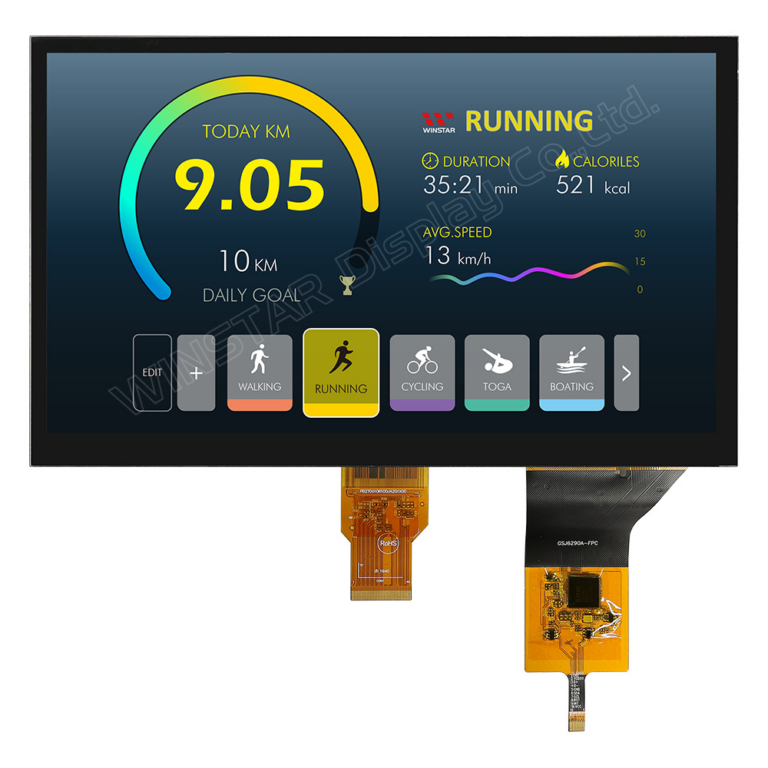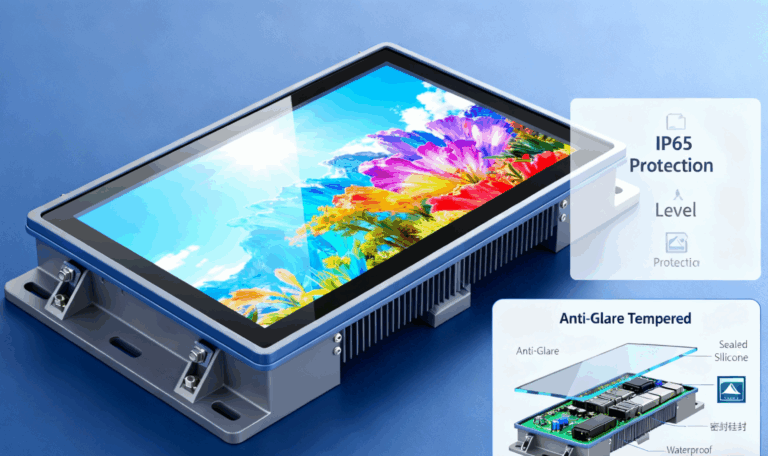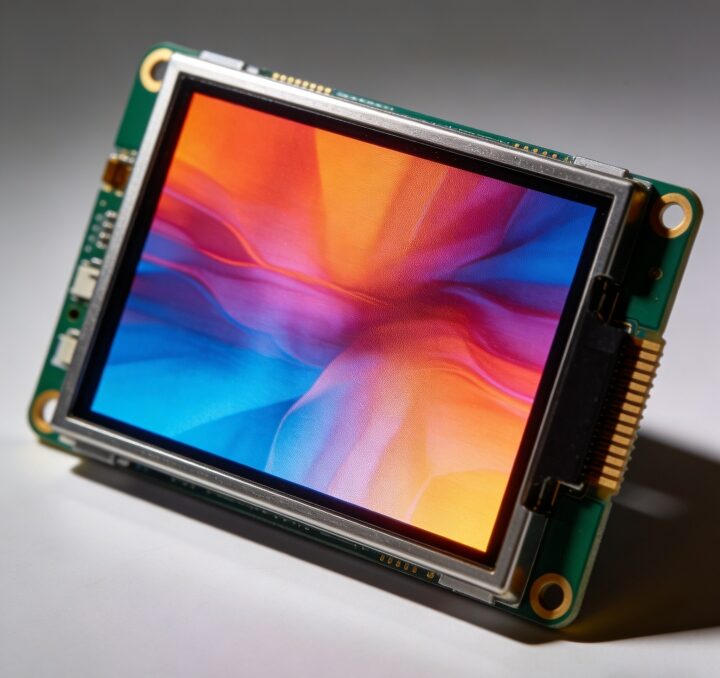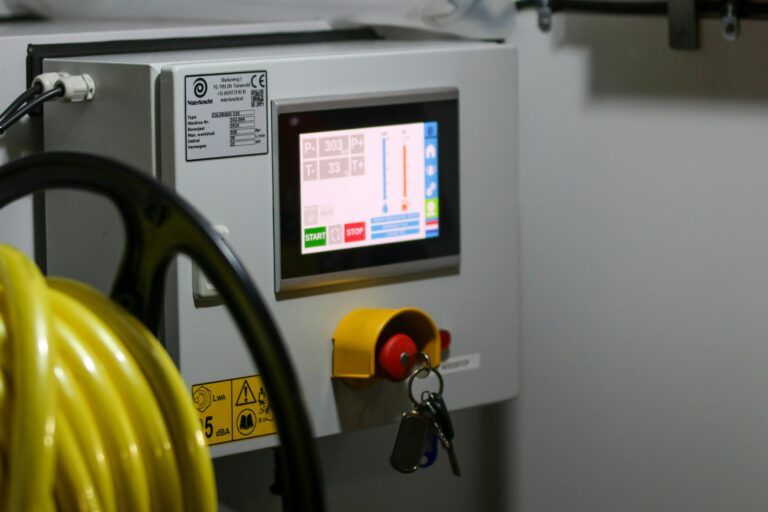


Liquid crystal displays have been widely implemented in consumer electronics, industrial systems, medical devices, and automotive displays. Resolution, being the primary factor, plays a crucial role in deciding on an LCD screen; however, it is often troublesome to compare different features. A brief lcd resolutions guide can be of great help in understanding how the resolution impacts not only the quality of the display but also the appropriateness of the device for a certain application.
1. Understanding LCD Resolution
It is a measure that comprises pixels on a screen, like 800×600 or 1920×1080. The significance is that it impacts image sharpness. Higher resolution improves readability but also increases processing and power requirements.
2. Popular LCD Resolutions and Their Uses
Different LCD resolutions are being made for different operation scenarios. Here are some of the most popular resolutions explained in this lcd resolutions guide and their standard uses.
- 240×320 (QVGA)
This resolution was typically used in the first portable gadgets and simple display modules. It supports displaying only text and icons, thus consuming less power and requiring minimal hardware.
- 320×240 (QVGA)
It has the same total pixels as 240×320, but this resolution is for landscape orientation. You will find it in industrial instruments and small control panels.
- 480×320 (HVGA)
HVGA can deliver better visuals than QVGA resolutions. People still use it for embedded systems and first-level consumer electronics where moderate image clarity is enough.
- 640×360 (nHD)
nHD is the smallest high-definition resolution that can easily handle widescreen videos. An lcd resolutions guide recognizes this resolution as a dividing line between low-resolution and high-definition displays.
- 800×600 (SVGA)
SVGA is very popular in industrial monitors, educational gadgets, and old systems. It provides a good compromise between clarity and compatibility with already existing hardware platforms.
- 1024×768 (XGA)
XGA is a classic resolution suitable for applications that require detailed information display, such as medical monitors and security systems. It remains relevant in many professional environments.
Full HD is one of the most popular resolutions in modern LCD displays. According to many lcd resolutions guide references, it provides excellent image clarity for multimedia, advertising displays, and advanced industrial interfaces.

- 2560×1440 (QHD)
QHD delivers higher pixel density and sharper images than Full HD. It is ideal for professional applications, design work, and high-end visual systems that demand superior image quality.
3. Why Does Resolution Matter?
(1) How Do Clarity and Detail Affect Display Quality?
In fact, clarity and detail are some of the top reasons that resolution makes a difference to display quality in any lcd resolutions guide. To put it simply, a higher resolution means more pixels to depict the images and text, thus the edges of the characters and shapes become smoother, and the overall visual details become finer.
(2) How Do Screen Size and Viewing Distance Influence Resolution Choice?
Screen size and viewing distance greatly determine how resolution is going to be perceived. A basic rule of thumb in any lcd resolutions guide is that when the screen gets bigger, a higher resolution is needed to keep the image sharp, and at the same time, when the viewing distance gets shorter, the pixel structure becomes even more noticeable. Making the right resolution choice guarantees not only visual comfort but also less eye fatigue if the usage is going to be prolonged.
4. Application-Specific Requirements
When selecting an LCD resolution, application context is crucial. An lcd resolutions guide usually highlights the following three considerations:
- Industrial applications: Mainly concentrate on the aspect of readability, stability, and long-term reliability
- Consumer electronics: Put the main focus on the visual appeal, color accuracy, and user experience
- Medical and inspection equipment: Need to have very high resolution for accuracy and detailed observations
5. Impact on Performance
When pixel density is high, the sharpness of images is improved, and texts become easier to read, most notably on smaller screens.
(1) How Does Pixel Density Affect Display Quality?
Pixel density refers to how many pixels fit in a given area. It is basically a measure of pixels per inch or pixel density, and is one of the most important things you can find lcd resolutions guide, helping you out. More densely packed pixels will result in a sharper image. One will be able to see the details of the image and the words on a display more clearly, especially if it is a small one.
(2) Why Does the Aspect Ratio Matter for Content Display?
The aspect ratio is essentially set by the resolution, and it determines how pictures and user interfaces are displayed. In an lcd resolutions guide, choosing the right aspect ratio will help you get rid of problems like image distortion and unwanted screen space, thus ensuring that the content is delivered in the correct way.
(3) What Is the Connection Between Refresh Rate, Response Time, and Resolution?
When the resolution gets higher, more data has to be handled per frame, thereby impacting the refresh rate and response time. A comprehensive lcd resolutions guide would state that it is very important to strike a balance between resolution and system performance, particularly with respect to applications that feature a lot of motion, video playback, or real-time interaction.
6. Choosing the Right Resolution
- Application Requirements
The aspect ratio is essentially set by the resolution, and it determines how pictures and user interfaces are displayed. In an lcd resolutions guide, choosing the right aspect ratio will help you get rid of problems like image distortion and unwanted screen space, thus ensuring that the content is delivered in the correct way.
- Environmental Conditions
Various factors, such as lighting conditions, viewing angle, and distance of the viewer, contribute to the overall perception of resolution. These considerations should be evaluated together when selecting a display.
- Budget Constraints
Higher resolution displays usually come at a higher cost. A practical lcd resolutions guide helps balance performance expectations with budget limitations to achieve the best overall value.
7. Conclusion
An explicitly delineated LCD resolution guide determines that each resolution has its purpose, which depends on usage, required performance levels, and the budget that is available. It is possible for users to makea savvy decision if they get to know the characteristics of the different resolutions, i.e., from the simplest QVGA displays to the high definition and QHD screens. At Easy Quick, we put a great emphasis on quality and customization to cater to the varied requirements of our customers, thereby offering tailored display solutions for every application.