
Introduction
Your product stands out in the market—so why settle for a standard off-the-shelf display?
Many engineering teams default to catalog LCD modules during product development. It’s faster initially, cheaper on paper, and requires zero customization effort. But here’s what most procurement managers discover too late: standard displays often compromise your product’s potential.
Suboptimal dimensions, mismatched brightness, limited interface options, and bulky form factors can undermine user experience, inflate BOM costs, and delay market launch.
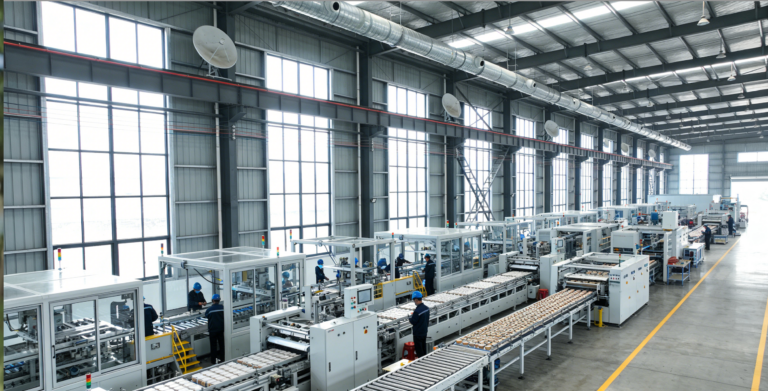
As a custom LCD display manufacturer with 18+ years of experience and 1,500+ successful customization projects across 50 countries, we’ve helped companies transform their product competitiveness through tailored display solutions.
In this guide, we’ll show you exactly when custom LCD displays make business sense, the customization process, and real ROI examples from our customers.
The Hidden Costs of Standard LCD Modules
Compromise #1: Suboptimal Form Factor
Standard displays come in fixed sizes (2.4″, 3.5″, 5.0″, 7.0″). If your industrial enclosure or consumer device has specific space constraints, you’re forced to:
Redesign your entire product around available display sizes
Accept wasted space (increased product dimensions)
Deal with awkward aspect ratios that don’t match your UI
Real impact: A medical device customer reduced their product size by 23% after switching from a standard 5″ display to a custom 4.3″ module—critical for portable equipment.
Compromise #2: Performance Mismatch
Catalog displays offer generic specifications:
Brightness: 400-500 nits (insufficient for outdoor use)
Temperature range: 0°C to 50°C (inadequate for industrial/automotive)
Interface: Only RGB or SPI (may not match your MCU)
Touch option: Resistive or capacitive (not both)
Result: Over-specifying (paying for features you don’t need) or under-specifying (compromising product performance).
Compromise #3: Supply Chain Risk
Popular standard displays face:
High demand → allocation during shortages
Frequent EOL (end-of-life) announcements
Multiple sources → quality inconsistency
Limited long-term availability guarantee
Industry reality: Many standard displays have 2-3 year lifecycle vs. 7-10 years for industrial-grade custom solutions.
5 Strategic Advantages of Custom LCD Displays
1. Perfect Mechanical Integration
What you get:
Exact dimensions matching your enclosure (down to 0.1mm tolerance)
Custom mounting hole patterns
Flexible cable routing (FPC length, position, orientation)
Unique bezel designs for brand differentiation
Case study: An automotive dashboard manufacturer achieved 15% cost reduction by eliminating adapter frames and redundant mounting hardware through a custom-shaped display.
2. Optimized Performance for Your Application
Tailored specifications:
Brightness: 300 nits (indoor) to 1000+ nits (sunlight readable)
Operating temperature: -30°C to +85°C (industrial/automotive grade)
Interface selection: RGB, SPI, I2C, UART, MIPI, LVDS
Touch technology: Resistive, capacitive (PCAP), or hybridSpecial coatings: Anti-glare, anti-fingerprint, waterproof
Example: A smart agriculture device required 800-nit brightness for outdoor visibility and -20°C to +70°C operation. A custom solution cost only 12% more than standard but eliminated 3 field failures.
3. Reduced Total BOM Cost
Counterintuitive but true: custom displays can lower total system cost.
Cost savings from:
Eliminating adapter boards and connectors
Reducing enclosure complexity (no compensating for display dimensions)
Consolidating components (integrated touch + display + cover glass)
Lower assembly labor (perfect fit = faster installation)
ROI calculation: A customer’s custom 3.95″ display cost $2.50 more per unit than a standard 4.3″, but saved $4.80 in enclosure, connectors, and assembly—net savings: $2.30 per unit. At 10K annual volume: $23,000/year.
4. Enhanced User Experience
UX improvements through customization:
Optimal screen size for your specific UI (no wasted pixels)
Perfect aspect ratio (16:9, 4:3, 1:1, or custom)
Tailored brightness curve for your use environment
Custom color calibration matching your brand identity
Integrated touch gestures optimized for your workflow
Competitive edge: Premium feel that justifies higher product pricing.
5. Long-Term Supply Security
Custom display advantages:
Dedicated production line (no competition with other customers)
7-10 year availability guarantee (contractual)
Controlled BOM (no unauthorized component substitutions)
Priority support during component shortages
Exclusive rights to your custom design
When Standard Displays Still Work
✅ Prototype phase: Validate concept before committing to custom
✅ Very low volume: <500 units/year (NRE cost prohibitive)
✅ Short lifecycle: <2 years (disposable products)
✅ Generic application: No special requirements
Custom LCD Development Process (Step-by-Step)
Phase 1: Requirements Definition (1-2 weeks)
What we need from you:
Mechanical drawings (dimensions, mounting, clearance)
Environmental specs (temperature, humidity, vibration)
Optical requirements (brightness, contrast, viewing angle)
Interface compatibility (MCU, voltage, protocol)
Touch requirements (type, hardness, surface treatment)
Target cost and annual volume
Deliverable: Custom display specification document (signed off by both parties)
Phase 2: Feasibility & Quotation (1 week)
Our engineering team evaluates:
Technical feasibility (can we meet your specs?)
Tooling requirements (molds, fixtures, test equipment)
Component sourcing (long-lead items, alternates)
Production capacity (can we meet your volume?)
Cost breakdown (NRE, unit price at different volumes)
Deliverable: Formal quotation with NRE cost, unit pricing, lead times
Phase 3: Prototyping (2-3 weeks)
What happens:
Custom FPC design and fabrication
Display module assembly
Firmware adaptation (if custom interface)
Basic functional testing
Deliverable: 3-5 engineering samples for your evaluation
Phase 4: Validation & Testing (2-4 weeks)
Your team conducts:
Mechanical fit check
Electrical compatibility testing
Environmental testing (temperature, humidity, vibration)
User experience validation
Our support:
Design iterations (if modifications needed)
Test report review
Compliance guidance (CE, FCC, RoHS, REACH)
Phase 5: Mass Production (4-5 weeks after sample approval)
Production ramp:
Component procurement (secured for your volume)
Module assembly (dedicated production line)
Quality control (AQL 2.5 or tighter per your requirements)
Packaging and shipping
Ongoing: Monthly production reports, quality metrics, continuous improvement
NRE Cost Breakdown (What to Expect)
Typical NRE Components
| Item | Cost Range | One-time or Recurring? |
| Custom FPC design | $800 – $2,500 | One-time |
| Mold/tooling (if new housing) | $1,500 – $5,000 | One-time |
| Firmware adaptation | $500 – $2,000 | One-time |
| Test fixture | $300 – $1,000 | One-time |
| Engineering samples (3-5 pcs) | $200 – $500 | One-time |
| Total NRE | $3,300 – $11,000 | One-time |
ROI Calculation Example
Scenario: Custom 4.3″ display vs. standard 5″ module
NRE investment: $6,500
Unit cost savings: $1.80 (custom $14.20 vs. standard $16.00)
Annual volume: 5,000 units
Payback period: $6,500 ÷ ($1.80 × 5,000) = 0.72 years (8.6 months)
5-year savings: ($1.80 × 5,000 × 5) – $6,500 = $38,500
Common Customization Options We Offer
Optical Customization
Brightness: 300 to 1000+ nits
Surface treatment: Matte, glossy, AG, AF, AR coatings
Polarizer: Wide temperature, high contrast
Backlight: LED color, uniformity, dimming control
Mechanical Customization
Active area: Any size from 0.96″ to 15.6″
Overall dimensions: Tailored to your enclosure
Mounting: Holes, brackets, adhesive options
Cable: FPC length, orientation, connector type
Electrical Customization
Interface: RGB, SPI, I2C, UART, MIPI, LVDS
Voltage: 1.8V, 3.3V, 5V, 12V (or custom)
Pinout: Match your existing PCB layout
Driver IC: Compatible with your MCU
Touch Customization
Type: Resistive (4-wire, 5-wire), capacitive (PCAP)
Surface: Glass thickness, hardness (3H to 9H)
Coatings: Anti-fingerprint, anti-glare, waterproof
Gestures: Custom touch patterns for your UI
Conclusion
Custom LCD displays aren’t just about fitting your enclosure—they’re a strategic competitive advantage.
The right custom display solution can:
✅ Reduce total BOM cost by 10-25%
✅ Accelerate time-to-market with perfect integration
✅ Enhance user experience and justify premium pricing
✅ Secure long-term supply for product lifecycle
✅ Differentiate your product in crowded markets
The question isn’t “Can we afford custom?”—it’s “Can we afford NOT to customize?”
For companies with 1,000+ annual units and 3+ year product lifecycles, custom LCD displays typically deliver positive ROI within 12 months.
Ready to Explore Custom Display Solutions?
At EasyQuick LCD, we specialize in custom LCD display manufacturing with:
✅ 50+ R&D engineers for rapid customization
✅ NRE cost: $3,300 – $11,000 (transparent pricing)
✅ Prototype lead time: 2-3 weeks
✅ Mass production: 4-5 weeks after sample approval
✅ 7-10 year supply guarantee for custom projects
✅ 1,500+ successful customizations across 50 countries
Not sure if custom makes sense for your project?
Contact our engineering team for a free feasibility assessment — We’ll analyze your requirements, compare custom vs. standard options, and provide a detailed ROI calculation.