
Introduction
You’re designing a new industrial device, medical equipment, or automotive dashboard. The display selection decision is critical—it impacts user experience, power consumption, product cost, and long-term reliability.
Two technologies dominate the market: TFT LCD and AMOLED. Both have their strengths, but which one is right for your specific application?
As a display manufacturer with 18+ years of experience and 1,500+ successful projects across 50 countries, we’ve helped countless engineers and procurement managers make this decision. In this guide, we’ll break down the key differences, real-world trade-offs, and provide a clear framework for choosing the optimal display technology for your 2026 product.
Understanding the Core Technology Differences
How TFT LCD Works
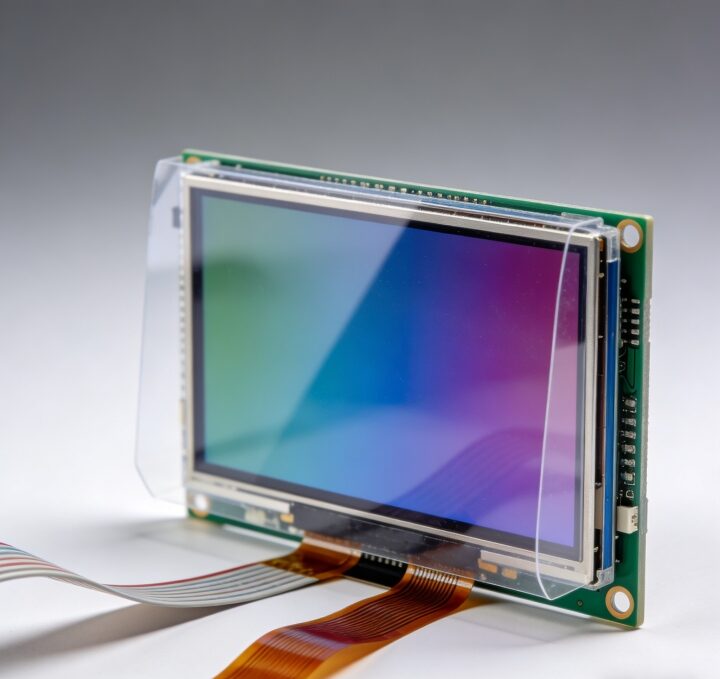
TFT (Thin-Film Transistor) LCD displays use a backlight system to illuminate pixels. The liquid crystal layer controls how much light passes through color filters to create images.
Key characteristics:
Requires constant backlight power
Pixels cannot emit light independently
Mature manufacturing process (cost-effective)
Excellent performance in bright environments
How AMOLED Works
AMOLED (Active-Matrix Organic Light-Emitting Diode) displays use organic compounds that emit light when electricity is applied. Each pixel is self-emissive.
Key characteristics:
No backlight required (pixels emit their own light)
True blacks (pixels can turn off completely)
Higher contrast ratios
More complex manufacturing (higher cost)
Head-to-Head Comparison Table (2026 Data)
| Parameter | TFT LCD | AMOLED | Winner for Industrial |
| Contrast Ratio | 800:1 to 1500:1 | 10,000:1+ | AMOLED |
| Brightness | 400-1000+ nits | 600-800 nits | TFT LCD |
| Power Consumption | Constant (backlight) | Content-dependent | TFT LCD (static UI) |
| Lifespan | 50,000-100,000 hours | 30,000-60,000 hours | TFT LCD |
| Operating Temperature | -30°C to +85°C | -20°C to +70°C | TFT LCD |
| Burn-in Risk | None | Moderate (static images) | TFT LCD |
| Unit Cost (5″ panel) | $12-18 | $25-40 | TFT LCD |
| MOQ | 100-500 pcs | 1,000-3,000 pcs | TFT LCD |
| Customization | High flexibility | Limited options | TFT LCD |
| Sunlight Readability | Excellent (with reflective) | Good | TFT LCD |
When to Choose TFT LCD (5 Ideal Scenarios)
1. Industrial Control Panels & HMI
Why TFT LCD wins:
Static UI elements (no burn-in risk)
Wide temperature operation (-30°C to +85°C)
Lower cost for medium volumes (500-5,000 units)
Proven reliability in harsh environments
Real-world example: Factory automation panels running 24/7 for 10+ years with consistent performance.
2. Medical Devices & Patient Monitors
Why TFT LCD wins:
Long-term availability (7-10 year supply guarantee)
Regulatory compliance (ISO 13485 certified manufacturers)
Stable color performance over time
No risk of image retention during critical monitoring
Industry requirement: Medical devices often require 10+ year product lifecycles—TFT LCD supply chains are better established for long-term support.
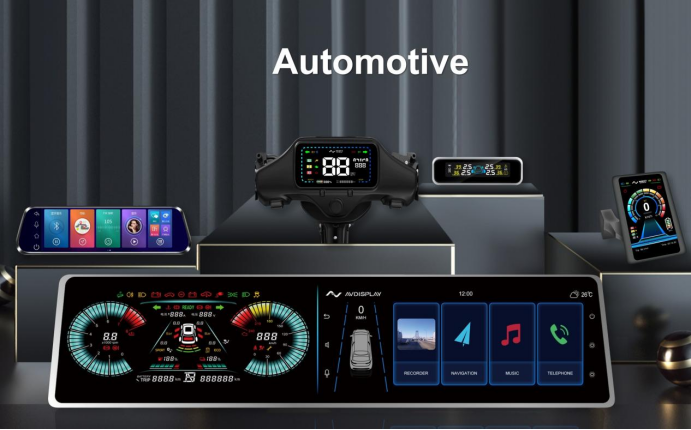
3. Automotive Dashboards & Instrument Clusters
Why TFT LCD wins:
IATF 16949 certified suppliers widely available
Superior performance in extreme temperatures (-40°C to +85°C)
Sunlight readability (critical for safety)
Lower cost for high-volume automotive programs
Note: Premium vehicles may use AMOLED for infotainment, but instrument clusters remain predominantly TFT LCD.
4. Outdoor Equipment & Rugged Devices
Why TFT LCD wins:
High brightness options (800-1000+ nits)
Reflective/transflective technology for sunlight readability
Better resistance to UV degradation
Proven durability in harsh conditions
Application examples: Construction equipment, agricultural machinery, marine instruments.
5. Cost-Sensitive Consumer Products
Why TFT LCD wins:
40-60% lower unit cost vs. AMOLED
Lower MOQ requirements (100-500 pcs for prototypes)
Faster tooling time (2-3 weeks vs. 4-6 weeks)
More supplier options (competitive pricing)
When AMOLED Makes Sense (3 Scenarios)
1. Premium Wearables & Smartwatches
Why AMOLED wins:
Always-on display with minimal power (dark UI)
Sleek, thin form factor
Superior visual appeal (marketing advantage)
Flexible/curved display options
2. High-End Consumer Electronics
Why AMOLED wins:
Premium brand positioning
Superior video/gaming experience
Deep blacks and vibrant colors
Thinner device design
3. Battery-Powered Portable Devices (Specific Use Cases)
Why AMOLED wins:
Dark mode UI significantly reduces power consumption
Content is primarily video/media (not static)
Premium pricing can absorb higher display cost
Total Cost of Ownership (TCO) Analysis
Don’t just compare unit prices. Consider the full picture:
TFT LCD TCO Advantages
Lower unit cost: $12-18 vs. $25-40 (5″ panel, 1K volume)
Lower MOQ: Reduces inventory risk
Longer lifespan: Fewer warranty claims
Stable supply: Multiple qualified suppliers
Easier customization: Lower NRE costs
AMOLED Hidden Costs
Higher unit cost: 2-3x TFT LCD pricing
Burn-in mitigation: Requires UI design changes (software cost)
Shorter lifecycle: More frequent redesigns
Limited suppliers: Less pricing competition
Temperature restrictions: May require additional thermal management
Procurement Checklist for Display Selection
Use this framework when evaluating display technology:
Application Requirements:
Operating temperature range
Expected product lifespan (years)
Brightness requirements (nits)
Power budget constraints
UI characteristics (static vs. dynamic content)
Business Considerations:
Target unit cost
Annual volume projection
MOQ tolerance
Supply chain risk tolerance
Long-term availability needs (5/7/10 years)
Technical Support:
Supplier engineering support availability
Driver/firmware compatibility
Customization flexibility
Sample lead time
Mass production lead time
Scoring: If 7+ checkboxes favor TFT LCD → Choose TFT. If 7+ favor AMOLED → Consider AMOLED.
Conclusion
For most industrial, medical, automotive, and cost-sensitive applications, TFT LCD remains the superior choice in 2026. The combination of proven reliability, wide temperature operation, lower cost, and long-term supply stability makes it the pragmatic choice for B2B products.
AMOLED excels in premium consumer applications where visual experience, thin form factors, and marketing appeal justify the higher cost and trade-offs.
The smartest approach: Match display technology to your specific application requirements—not marketing trends.
Ready to Evaluate Your Display Options?
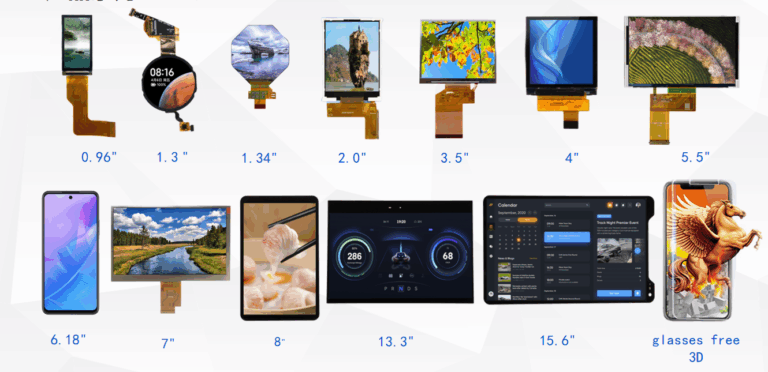
At EasyQuick LCD, we specialize in TFT LCD display solutions from 0.96″ to 15.6″, with:
✅ IATF 16949, ISO 9001, ISO 14001 certified manufacturing
✅ 50+ R&D engineers for customization support
✅ 1,500+ customers across 50 countries
✅ Sample lead time: 2-3 weeks | Mass production: 4-5 weeks
✅ Long-term supply guarantee (7+ years for selected models)
Not sure which display technology fits your project?
Contact our engineering team for a free consultation — We’ll help you evaluate TFT LCD vs. AMOLED based on your specific requirements, budget, and timeline.
Browse our TFT LCD product portfolio | Learn about custom display solutions
FAQ: TFT LCD vs AMOLED
Q1: Can AMOLED displays work in extreme temperatures like TFT LCD?
A: Generally, no. AMOLED displays typically operate between -20°C to +70°C, while industrial TFT LCD modules can handle -30°C to +85°C (some even -40°C to +90°C). For automotive, outdoor, or industrial applications with temperature extremes, TFT LCD is the safer choice.
Q2: How significant is the cost difference between TFT LCD and AMOLED?
A: For a typical 5-inch display at 1,000-unit volume, TFT LCD costs $12-18 per unit, while AMOLED costs $25-40 per unit—2-3x higher. At higher volumes (10K+), the gap narrows but AMOLED remains 40-60% more expensive. Factor in lower MOQ and longer lifespan, and TFT LCD offers better TCO for most B2B applications.
Q3: Is burn-in still a problem with modern AMOLED displays?
A: Burn-in risk has improved with newer AMOLED generations, but it remains a concern for applications with static UI elements (industrial HMIs, medical monitors, automotive instrument clusters). If your display shows static content for extended periods, TFT LCD eliminates this risk entirely.