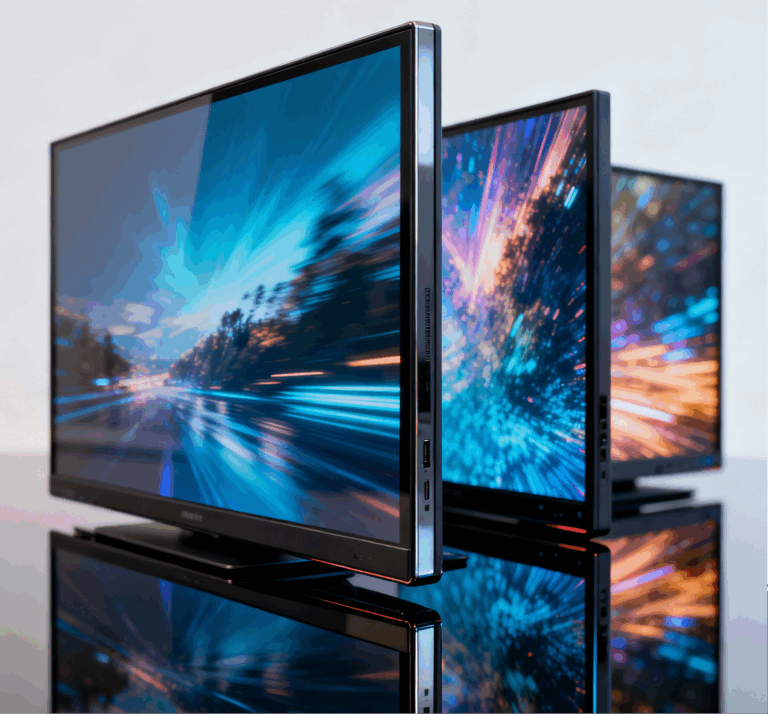

In today’s world, it’s commonplace for many devices to use displays to ensure content is presented in an easy-to-read manner. However, strong sunlight can make information on the screen difficult to discern. This is precisely the main reason why sunlight-readable displays have become so popular in recent years. For sunlight-readable displays, their optical characteristics are crucial. This article will explore the main optical characteristics of such displays.
High Brightness Levels and Adjustability
The most important optical characteristics of the sunlight-readable display include its brightness. However, it is worth noting that the brightness level of the sunlight-readable display is quite high. The brightness level of the sunlight-readable display is always above 1000 nits. This indicates that it is possible to have visibility of the sunlight-readable display even in the outdoor environment.
The sunlight-readable display is therefore able to provide clear images and text. Therefore, it is possible to read the display even when the sun is directly on it. The sunlight-readable display is usually adjustable. This means that it is possible to adjust the brightness level of the sunlight-readable display to the required level.

Optically Bonded Glass for Better Visibility
Another significant factor in improving visibility in bright sunlight conditions is optically bonded glass. In general display devices, there will be an air gap between the display device and the protective glass. Because of this air gap, there will be a certain amount of reflection. Due to this reflection, the visibility of the display will be affected in bright sunlight conditions.
In optically bonded display devices, there will be no air gap between the display device and the protective glass. Instead, there will be a special adhesive layer between them. Because of this adhesive layer, there will be a reduction in reflections. In addition, there will be an improvement in the contrast ratio of the display device. Because of this improvement in contrast ratio, the display images will be clear and sharp.
Due to the absence of an air gap between the display device and the protective glass, there will be a decrease in the reflections inside the display device. Due to the decrease in the display device’s reflections, the quality of the display will not be affected under bright sunlight conditions.
This technology will be useful for outdoor kiosks, automotive devices, and handheld devices.
Anti-Glare and Anti-Reflection Coatings
In addition to optically bonding the glass, the other significant optical design feature used to enhance the display readability of the sunlight-readable display used in this device is the use of anti-glare and anti-reflection coatings.
Glare from the reflection of sunlight on the screen can interfere with the display’s readability on the screen.
The use of anti-glare coatings aims at reducing the intensity of the sunlight reflected onto the screen.
The use of anti-reflection coatings goes a step further by reducing the reflected light from the ambient and the direct sunlight. This is achieved by reducing the amount of reflected light off the screen’s surface to ensure the readability of the displayed information. This ensures that the displays have good image quality.
The use of this anti-glare and anti-reflection coating is significant for displays that are to be used by the general public, where the user of the display will likely use it in the presence of direct sunlight.
Daylight Visibility and Improved Image Quality
Sunlight-readable displays are created to operate in environments where there is daylight. This makes sure that the information shown on these displays can be easily read in the daylight.
Daylight visibility is a significant feature for any display screen that is required to be used in outdoor environments. This is based on the display screen’s ability to operate in high ambient light.
Daylight visibility is based on various factors. The factors include high contrast ratios, optically bonded glass, and anti-reflective capabilities. All these factors enhance the image quality. Enhanced image quality is based on high contrast ratios that enable sharp text display, vibrant colors, and high black levels.
Display screens that offer high levels of daylight visibility are important in various applications. Display screens that offer high levels of visibility are important in digital signage, transport systems, and outdoor advertising. In these applications, the display screens must be able to offer high visibility to ensure they capture attention.
Durability: Dustproof and Waterproof Capabilities
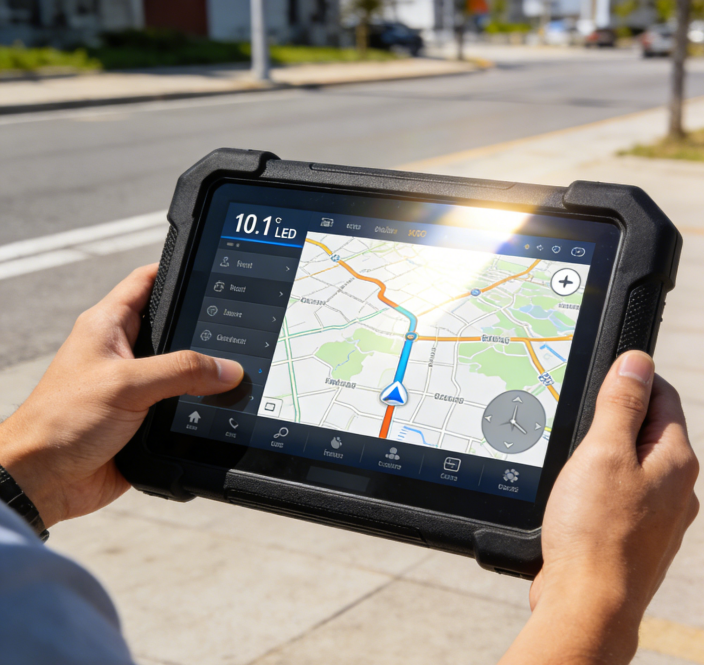
In terms of durability, it is as important as it is in the case of the optical properties. The sunlight-readable displays are dustproof and waterproof. This makes it easier to ensure that the devices work optimally in different weather conditions. The devices are usually provided with an IP65 rating or higher. This means that the devices are resistant to dust and can withstand water jets from any direction.
This is important because it ensures that the internal components of the display are shielded from dust and moisture. This is especially important in the case of displays that are exposed to the elements. The displays include outdoor kiosks, billboards, and vehicle displays.
Conclusion
Sunlight-readable displays are very significant in devices and applications that are used in outdoor environments where bright light conditions are the norm. Whether you’re looking for a display for an outdoor advertising kiosk, vehicle dashboard, or digital signage, knowing these key optical properties will help you make an informed decision and choose the right display for your needs.