
1. Understanding In-Cell Display Technology
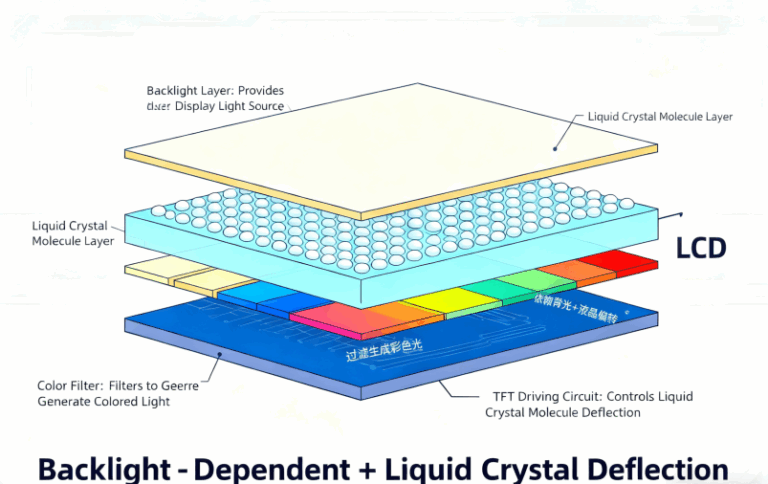
An in-cell display is a modern touchscreen technology that integrates the touch sensor directly into the display panel, instead of adding it as a separate layer on top. Unlike traditional G+G (Glass + Glass) or On-Cell structures, the in-cell method embeds the touch detection electrodes inside the TFT (Thin Film Transistor) or color filter layer.
This integration allows manufacturers to reduce the overall module thickness by around 20–30%, typically achieving a total thickness of 1.2 mm or less. By removing an external touch layer, the display also achieves higher light transmittance and faster touch response.

2. How an In-Cell Display Works
2.1 Layer Integration
In an in-cell panel, the display driver and touch sensor share the same substrate. When a finger touches the screen, it causes a local change in capacitance, which is instantly detected by the integrated circuits.
2.2 Optical Advantages
Because there are fewer optical interfaces, in-cell displays transmit more light—often achieving transmittance rates above 90%. This means users see brighter images with better color accuracy, even under sunlight.
2.3 Responsive Interaction
The close proximity of the touch sensor to the display pixels reduces response time to under 10 milliseconds, ensuring fluid interaction for fast-motion applications such as mobile gaming and real-time control interfaces.

3. Key Advantages of In-Cell Display Technology
Ultra-Thin Design: Eliminating an extra touch layer makes devices slimmer and lighter.
Improved Optical Clarity: Fewer reflective layers result in higher contrast and vivid color reproduction.
High Touch Accuracy: Integrated sensing ensures precise input across the entire screen area.
Lower Power Consumption: Better light efficiency allows a 10–15% reduction in backlight power.
4. Applications of In-Cell Displays
4.1 Smartphones and Consumer Electronics
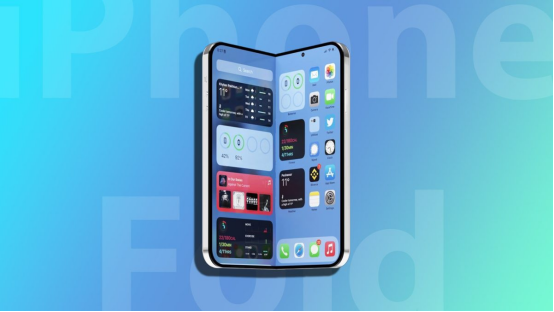
The most common use of in-cell displays is in flagship smartphones, such as Apple’s iPhone series and premium models from Samsung, Xiaomi, and Huawei. These devices rely on the thin, bright, and highly responsive nature of in-cell panels to deliver premium visual and touch experiences.
In the smartphone industry, the adoption rate of in-cell displays in high-end devices has exceeded 70% as of 2025, according to industry reports.

4.2 Tablets and Laptops
Many high-end tablets and ultrabooks adopt in-cell touch technology to achieve ultra-thin form factors without compromising display performance. The technology allows devices like Microsoft Surface and Lenovo Yoga to combine vibrant image quality with smooth handwriting input and gesture control.
4.3 Automotive Displays
In the automotive sector, in-cell displays are increasingly used for center consoles, navigation systems, and instrument clusters. Their slim profile helps reduce dashboard bulk, while their high brightness (often above 1000 nits) ensures visibility even in strong daylight.
4.4 Industrial and Medical Equipment
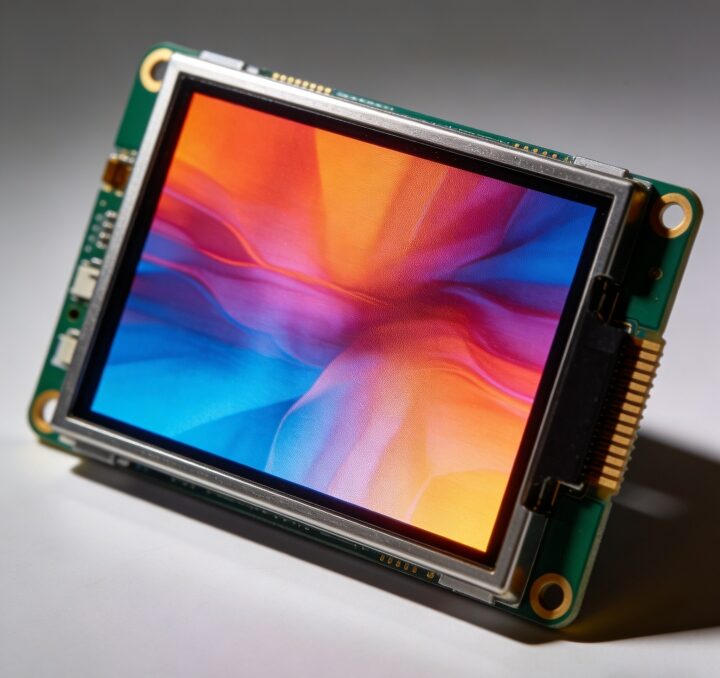
In-cell technology is also emerging in medical imaging monitors, handheld diagnostic tools, and industrial HMI systems where clarity, accuracy, and space efficiency are critical. For instance, a 10.1-inch in-cell IPS display offers high readability and precise control for compact devices used in laboratory or factory environments.
5. In-Cell Display vs. On-Cell Display
| Feature | In-Cell Display | On-Cell Display |
| Touch Layer Location | Integrated into TFT or CF layer | On top of display glass |
| Panel Thickness | ~1.2 mm | ~1.8 mm |
| Light Transmittance | 88–92% | 80–85% |
| Touch Response Time | <10 ms | ~15 ms |
| Production Cost | High | Medium |
| Applications | Flagship phones, tablets, automotive | Mid-range devices, monitors |
This comparison highlights that in-cell displays offer better optical performance and thinner design, though their production complexity and yield rate remain challenges for mass manufacturing.

6. Future Development Trends
With the growing demand for lightweight and high-resolution devices, in-cell OLED technology is becoming the next evolution. Future panels are expected to integrate under-display cameras, fingerprint sensors, and pressure-sensitive touch within the same structure.
Market forecasts show that the global in-cell display market will exceed USD 50 billion by 2030, growing at an estimated CAGR of 7–8%. As production efficiency improves, in-cell solutions will continue expanding from consumer electronics to professional and industrial applications.

7. Conclusion
The in-cell display represents a major step forward in the integration of touch and display technologies. By embedding the touch function inside the panel structure, it achieves thinner profiles, clearer images, and faster response times, making it the preferred choice for next-generation smart devices.
From smartphones and tablets to automotive and medical applications, in-cell displays are redefining how we interact with digital interfaces—delivering greater precision, design flexibility, and visual excellence in one unified solution.
At Shenzhen Easy Quick Technology Co., Ltd., we offer a wide range of in-cell display modules that cater to diverse applications, from compact mobile devices to industrial equipment. Whether you need high-resolution clarity, ultra-thin designs, or highly responsive touch performance, our in-cell solutions can help bring your next-generation devices to life. Contact us today to explore our extensive in-cell display portfolio and discover how we can support your projects.