

Industrial applications demand displays that can withstand harsh environments, maintain reliable performance, and provide clear visibility under various lighting conditions. Selecting the right LCD for industrial use requires careful consideration of several key factors, including durability, operating temperature, brightness, interface options, and touch capabilities. This article explores the types of LCDs suitable for industrial applications and provides guidance for choosing the most appropriate solution.
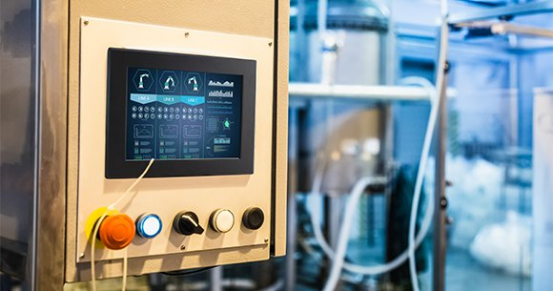
1. Key Considerations for Industrial LCDs
1.1 Operating Temperature Range
Industrial environments often involve extreme temperatures. Standard commercial LCDs usually operate between 0°C and 50°C, which is insufficient for many industrial scenarios. For industrial applications, look for displays with a wider operating temperature range:
Typical industrial LCDs: -20°C to +70°C
High-end industrial models: -40°C to +85°C
This ensures the display functions reliably in outdoor installations, manufacturing plants, or refrigeration equipment.

1.2 Brightness and Visibility
Visibility under bright lighting conditions is critical. Standard LCDs offer brightness levels around 200–300 nits, which may be insufficient for industrial use. Industrial LCDs provide:
Medium brightness: 400–700 nits, suitable for moderately lit environments
High brightness: 800–1500 nits, ideal for outdoor or sunlight-readable applications
High brightness ensures information on the screen remains clear even in direct sunlight or bright factory lighting.
1.3 Durability and Protection
Industrial displays must resist mechanical stress, dust, and moisture. Key features include:
IP65 or higher enclosure rating: Protects against dust and water ingress
Tempered glass or chemically strengthened cover: Reduces risk of scratches or impact damage
Vibration and shock resistance: Ensures stable operation in heavy machinery or transport applications
2. Types of LCDs Suitable for Industrial Use
2.1 Transmissive vs. Transflective LCDs
Transmissive LCDs rely on a backlight to illuminate the screen, offering vibrant colors and sharp images indoors. However, they can be difficult to read in direct sunlight.
Transflective LCDs combine transmissive and reflective layers, improving readability under bright light while maintaining good indoor visibility. Key specifications:
Typical brightness: 300–1000 nits
Contrast ratio: 500:1–1000:1
Operating temperature: -20°C to +70°C
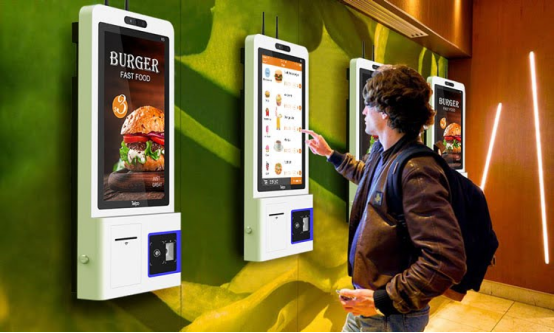
Transflective LCDs are generally preferred for outdoor industrial displays, kiosks, and machine interfaces.
2.2 TFT LCD Modules
Thin-Film Transistor (TFT) LCDs are widely used in industrial control panels, measurement instruments, and medical equipment. Advantages include:
High resolution: e.g., 480×272, 800×480, 1024×600
Fast response time: ≤25ms, suitable for dynamic graphics
Wide viewing angles: 70°–85° horizontal and vertical, ensuring readability from different positions
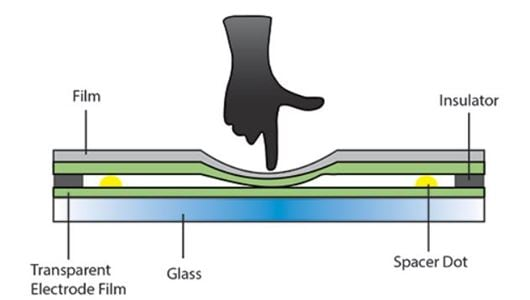
TFT LCDs can also be combined with resistive or capacitive touch panels, enabling interactive interfaces for industrial machines.
2.3 OLED vs. LCD in Industrial Applications
While OLED displays offer superior contrast and color saturation, they are less common in harsh industrial environments due to potential burn-in and lower temperature tolerance. LCDs remain the standard choice for most industrial applications due to their stability, long lifespan (typically 50,000–70,000 hours), and wide temperature range.
3. Interface and Integration
Industrial LCDs must support various interfaces for seamless integration with control systems:
Parallel RGB / MCU / SPI interfaces for embedded systems
LVDS or eDP for high-resolution applications
Touch interfaces: resistive, capacitive, or on-cell solutions depending on the environment
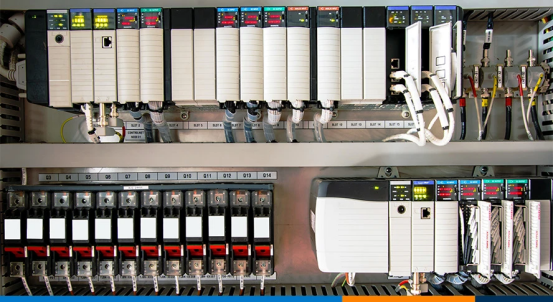
Choosing the correct interface ensures compatibility with industrial controllers, PLCs, or embedded boards.
4. Conclusion
Selecting an LCD for industrial use is not merely about size or aesthetics—it requires careful evaluation of operating temperature, brightness, durability, and interface compatibility. Transflective and TFT LCD modules are generally the most suitable choices, offering high visibility, robust construction, and flexible integration options. When combined with protective covers, wide viewing angles, and touch functionality, these displays provide reliable performance in demanding industrial environments.
Shenzhen Easy Quick Technology specializes in providing high-quality industrial LCD modules ranging from 3.5-inch to 15.6-inch, supporting custom interface, touch options, and brightness levels up to 1500 nits, meeting a wide range of industrial application requirements.