
When developing a new electronic product, one of the first practical questions buyers ask is how quickly they can obtain a tft lcd sample. Whether you are testing a concept, validating performance, or preparing for mass production, sample lead time directly affects your project timeline.
In reality, the delivery speed of a TFT LCD sample depends on several factors, including product availability, customization requirements, and supplier capability. Understanding these factors can help you plan more accurately and avoid unnecessary delays.
TFT LCD Sample Lead Time from a Supplier
The lead time for a tft lcd sample varies depending on whether the module is standard or customized. Most suppliers offer two typical scenarios.
Standard TFT LCD Sample
For off-the-shelf modules, the process is usually straightforward. If the supplier has stock available, samples can be shipped quickly.
Typical timeline:
- Sample preparation: 1–3 working days
- International shipping: 3–7 days
- Total lead time: around 1 week
For example, common sizes such as 3.5 inch (320×480) or 5 inch (800×480) TFT LCD modules are often readily available, which significantly shortens delivery time.
Custom TFT LCD Sample
If your project requires customization, the timeline becomes longer due to engineering and validation steps.
Typical development cycle:
- Requirement confirmation: 1–3 days
- Design and modification: 1–2 weeks
- Sample production: 1–2 weeks
- Total lead time: 3–5 weeks
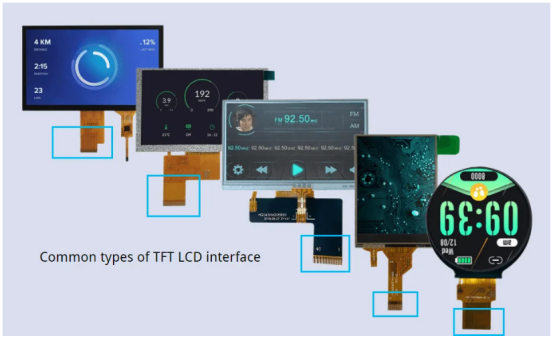
Customization may include interface changes (SPI, RGB, MIPI), brightness adjustments (e.g., from 300 nits to 1000 nits), or touch panel integration.
Key Factors Affecting TFT LCD Sample Speed
Not all tft lcd sample requests are processed at the same speed. Several factors influence how quickly you can receive a sample.
Product Availability
Stock availability is the biggest factor. Standard modules in popular sizes are usually pre-produced, while niche sizes or uncommon resolutions may require production from scratch.
Level of Customization
The more changes required, the longer the process:
- Minor changes (FPC adjustment): +5–7 days
- Medium changes (interface or brightness): +2–3 weeks
- Full customization (new design): +4–6 weeks
Engineering Communication
Clear technical documentation can save significant time. Providing the following upfront helps speed up the process:
- Interface requirements (e.g., LVDS, RGB)
- Resolution and size
- Touch panel requirements
- Operating environment
Incomplete information often leads to back-and-forth communication, delaying sample delivery.
How to Speed Up Your TFT LCD Sample Process
If your timeline is tight, there are practical ways to reduce delays when ordering a tft lcd sample.
Choose Standard Modules First
For early-stage testing, using a standard display can save 2–4 weeks compared to custom development. Once the design is validated, customization can follow.
Work with Experienced Suppliers
Suppliers with mature production lines and engineering teams can respond faster. Many established manufacturers can prepare samples within 48 hours if stock is available.
Confirm Specifications Early
Before requesting a sample, finalize key parameters:
- Display size and resolution
- Interface type
- Brightness level
- Touch requirement
This avoids repeated revisions and shortens development cycles.
Additional Considerations Beyond Sample Speed
While speed is important, it should not be the only factor when selecting a supplier. A reliable tft lcd sample should also meet quality and performance expectations.
Important aspects to evaluate:
- Consistency between sample and mass production
- Compliance with operating conditions (e.g., -20°C to +70°C)
- Stability under vibration for industrial or automotive use
Rushing the sampling process without proper validation can lead to issues later in production.
Conclusion
The time required to obtain a tft lcd sample depends largely on whether you choose a standard module or a customized solution. In most cases, standard samples can be delivered within one week, while custom projects typically take 3–5 weeks.
By selecting the right supplier, preparing clear specifications, and starting with standard modules when possible, you can significantly shorten your development timeline and move your project forward efficiently.